

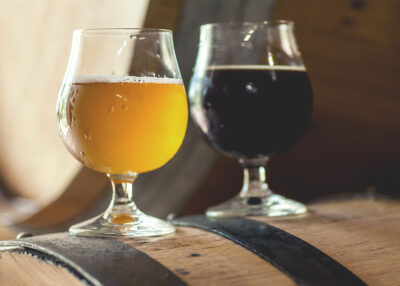
Before we get into the beer, it helps to understand the barrel.
Aging beer in wooden barrels began as a practical necessity. Before stainless steel tanks existed, brewers used whatever vessels they had access to and that often meant wood.
Today, barrel-aging is no longer about practicality, it’s about flavor. Barrels are chosen intentionally and each one is a world of complexity.
Most brewers use oak barrels, often previously filled with bourbon, whiskey, wine, rum or even tequila. Each barrel carries its own personality. Think vanilla sweetness from bourbon, dark fruit from red wine or spice and tannins from oak itself.
So What Happens Inside the Barrel?
A barrel isn’t just a container, it’s an active ingredient.
As the beer rests inside, it pulls in flavor from three key sources:
- The Wood Itself: Oak imparts notes of vanilla, coconut, caramel and subtle spice.
- The Spirit (or Wine) Residue: Whatever previously lived in the barrel leaves behind flavor and aroma.
- Micro-Oxygenation: Tiny amounts of oxygen seep through the wood over time, softening harsh edges and smoothing mouthfeel.
The result is a beer that’s richer, deeper and more layered than anything made in stainless steel. Barrel-aged beers are often bold, higher in alcohol, fuller in body and wonderfully complex.
Are All Barrel-Aged Beers the Same?
Nope. Not even close!
Just like how “saison” and “session” are two different things, “barrel-aged” doesn’t describe one specific flavor or style. It describes a process and that process can be applied to many types of beer.
Here are a few common variations:
- Bourbon Barrel-Aged Stouts: Rich, chocolatey, roasty and layered with caramel, oak and vanilla.
- Wine Barrel-Aged Sours: Tart, funky, fruity and influenced by grape character or Brettanomyces.
- Whiskey Barrel-Aged Barleywines: Big, warming and full of dark fruit flavors.
- Rum Barrel-Aged Strong Ales: Sweet, spicy and tropical-leaning.
The barrel you choose, and the base beer you start with, dramatically changes the outcome.
Why Do Barrel-Aged Beers Have a Higher ABV?
A common myth is that barrel-aging “automatically” boosts the alcohol content. Not true.
Brewers usually start with stronger base beers because they stand up better to long aging times and bold barrel flavors. The ABV bump from leftover spirits in the barrel is minimal. Barrel-aged beers are higher in alcohol because they’re brewed that way from the beginning.
How Long Should a Beer Age in a Barrel?
Think of barrel-aging like cooking low and slow.
Some beers rest for a few months, picking up gentle wood character. Others age for a year or more, developing deep, layered flavors. Too long, and the beer can become too woody. Not long enough and it may taste unfinished.
Brewers spend countless hours sampling, blending and deciding when a batch hits the perfect moment.
What Should Barrel-Aged Beers Be Paired With?
Thanks to their complexity, barrel-aged beers shine next to bold, rich foods, especially in colder months.
Great pairings include:
- Smoked or roasted meats
- BBQ ribs or brisket
- Chocolate desserts (especially anything fudgey or caramel-heavy)
- Sharp cheeses, like aged cheddar or blue cheese
- Nutty, sweet desserts, like pecan pie
Barrel-aged beers are a celebration of flavor, history and the beautiful things that happen when brewers let ingredients and wood do the talking. Next ime you’re at Druthers Brewing Company, make sure to try our Simple Truth Barleywine.
Cheers!