

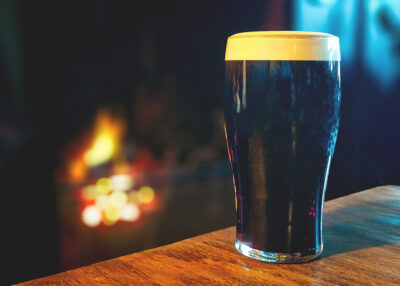
Every winter, beer seems to get darker.
The bright lagers and crisp pilsners of summer start giving way to rich stouts, smooth porters and beers packed with flavors of coffee, chocolate and roasted malt.
But why do dark beers become so popular when the temperature drops?
Is it just tradition? Or is there something about cold weather that makes a big, dark pint taste even better?
Let’s talk about it.
It Started With Porters
Before stouts became the stars of the dark beer world, there was porter.
Porter originated in England around the early 18th century and quickly became one of the most popular beer styles in London. It was dark, robust and flavorful, with roasted malt character that made it stand out from lighter beers of the time.
The name “porter” is often linked to the working-class porters of London, who reportedly enjoyed the style.
Porter eventually made its way across the Atlantic and became part of American brewing history.
And then came stout.
Stout Wasn’t Always Its Own Beer
Here’s a fun bit of beer history: stout originally wasn’t necessarily a separate style.
The word “stout” simply meant strong.
Brewers could make a “stout porter,” essentially a stronger version of a porter. Over time, stout developed its own identity, eventually becoming the rich, roasted beer we know today.
Modern stouts can range from dry and roasty Irish stouts to thick, sweet imperial stouts loaded with chocolate, coffee and dark-fruit flavors.
So while porter and stout are related, they’ve evolved into their own distinct beer experiences.
Why Do Dark Beers Taste So Good in Cold Weather?
This is where things get interesting.
Cold weather naturally makes us crave foods and drinks that feel warming, rich and comforting. Dark beers fit perfectly into that mood.
Roasted malts can create flavors that remind you of:
- Coffee
- Dark chocolate
- Caramel
- Toasted bread
- Nuts
- Molasses
- Dark fruit
Those flavors are bold and satisfying, especially when you’re sitting inside while the temperature drops outside.
A crisp lager might be exactly what you want on a hot summer afternoon. But when it’s 35 degrees outside? A rich stout suddenly makes a lot more sense.
What Makes a Beer Dark?
It all comes down to malt.
Beer gets much of its color and flavor from malted grains. Brewers can roast those grains to different levels, creating everything from pale golden colors to nearly black beer.
Darker roasted malts can bring intense flavors and aromas to the finished beer. That’s where you get those familiar coffee, chocolate and toasted notes.
And despite what the color might suggest, dark beer isn’t automatically stronger.
A dark porter can have a relatively moderate alcohol content, while some pale beers can pack a serious punch. Dark does not always mean strong.
Stouts vs. Porters: What’s the Difference?
This is one of the biggest questions for anyone getting into dark beer.
The simple answer?
They’re similar, but not identical.
Porters tend to be smooth, malty and roasty, often with flavors of chocolate, caramel and toasted grain.
Stouts can be more intense, with stronger roasted character and a wider range of interpretations.
But beer styles aren’t always perfectly separated. Modern craft brewers love to blur the lines. You might find a porter that tastes incredibly rich and chocolatey or a stout that is surprisingly light and dry.
The best way to understand the difference is to taste them side by side.
The Many Faces of Stout
One reason stouts have become so popular is that there’s a version for almost everyone.
There’s the classic dry Irish stout, known for its roasted character and relatively crisp finish.
Then there are milk stouts, which use lactose to create a creamy, slightly sweet profile.
Oatmeal stouts add oats for extra body and smoothness.
Imperial stouts turn everything up: more malt, more flavor and often more alcohol.
And then there are pastry stouts, barrel-aged stouts and experimental versions brewed with ingredients like coffee, vanilla, chocolate or coconut.
At this point, the category is almost its own playground for brewers.
Dark Beer Myths
Dark beer has picked up a few myths along the way.
Myth #1: Dark beer is always heavy.
Not necessarily.
A dry stout can actually feel surprisingly light and refreshing. Color tells you more about the roasted malt used than the beer’s overall body.
Myth #2: Dark beer always has more alcohol.
Also false.
A stout or porter can have a moderate alcohol level, while a pale ale, IPA or lager can be much stronger.
Always check the ABV rather than judging by color.
Myth #3: Dark beer is only for winter.
Definitely not.
Dark beers can be enjoyed year-round. But cold weather gives them a natural advantage because their rich flavors and aromas fit the season so well.
How to Drink a Stout or Porter
The best way to enjoy a dark beer is to slow down.
Unlike an ice-cold light lager that you might finish quickly, many stouts and porters reward you for taking your time.
Try this:
- Serve it cool, but not painfully cold
- Use a pint glass or tulip to capture the aromas
- Let the beer sit for a few minutes before drinking
- Take smaller sips and look for changing flavors
- Compare different styles to find your favorite
And don’t forget the food pairing!
Dark beers work especially well with:
- Beef stew
- Chili
- Barbecue
- Burgers
- Roasted meats
- Sharp cheddar
- Chocolate desserts
- Tiramisu
- Smoked foods
The roasted flavors in the beer can complement the caramelized, smoky and savory flavors in hearty winter dishes.
Next time you’re at Druthers Brewing Company make sure to try our Oatmeal Stout and Winter Warmer.
Cheers!